All Gas, No Brakes
Inside the Hyperactive Child’s Nervous System
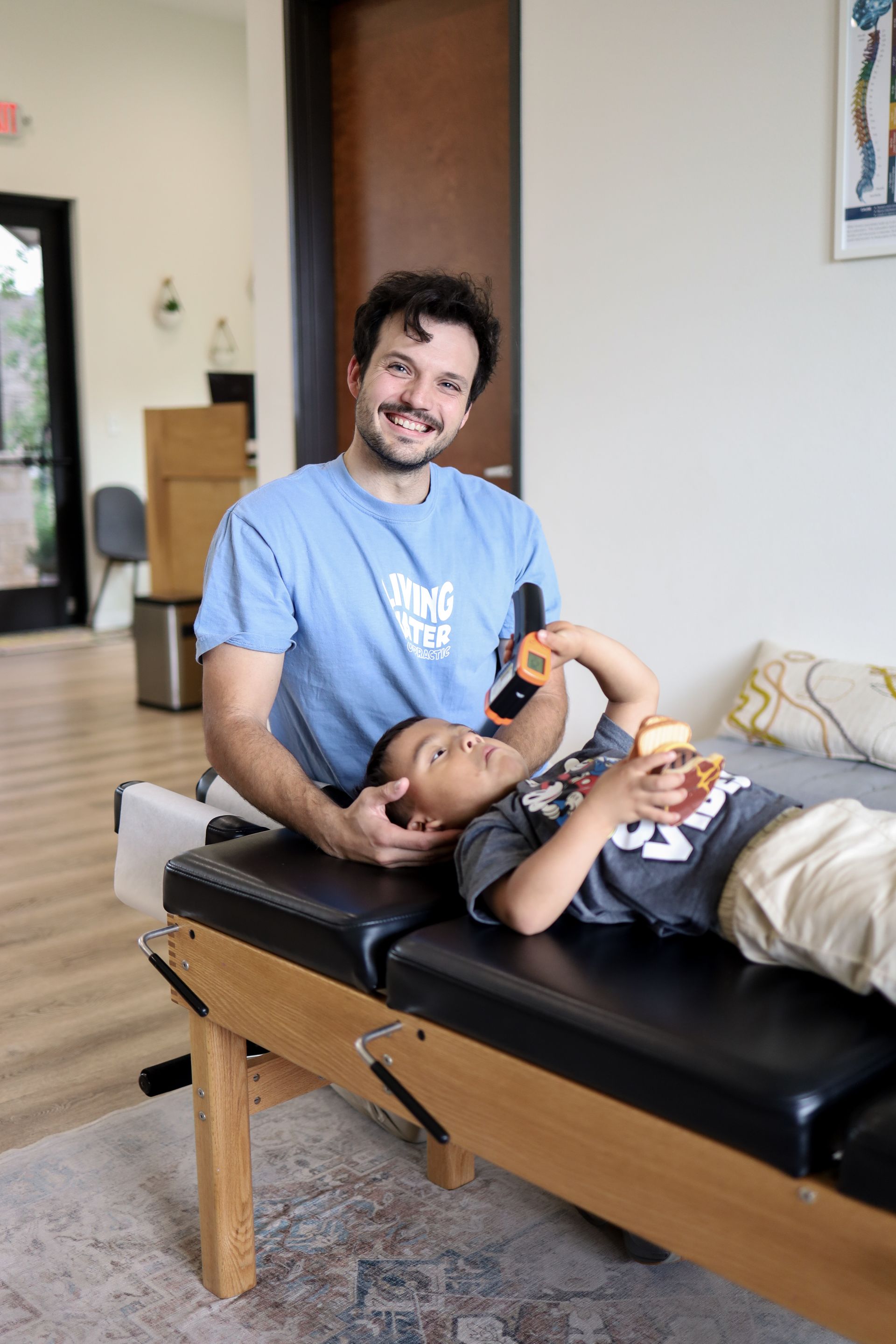
Your child never stops moving.
They run. They climb. They crash into furniture. They ride every bike faster than they probably should. And everyone tells you the same thing: “Wow, look at all that energy. They just need to burn it off.”
But then you watch them try to sit at a desk. Write their name. Follow a simple three-step instruction. Stay calm when a shirt tag feels wrong or a plan changes without warning. Fall asleep at night.
And you know something else is going on.
Here’s what almost nobody catches: the motion fools everyone. Parents, teachers, pediatricians, and even some physical and occupational therapists see a kid running and jumping and assume the motor system is working just fine. But going fast doesn’t take a clean, organized brain-body connection. It just takes raw output. Speed can hide a lot of disorganization underneath.
That’s chaos with momentum. If this sounds like your child, we want to walk you through what’s happening underneath all that noise, and what actually helps.
Is This Your Child?
This is for the exhausted parent of the kid who never slows down. The child who’s been written off as “just ADHD,” “just sensory seeking,” or “just how they are.”
If you’ve been told everything looks fine but your gut keeps telling you otherwise, you are not making this up.
What We See Every Week at Living Water Chiropractic
So many families walk into our Boerne office carrying the same story. Their child was flagged early for hyperactivity, big emotions, or sensory struggles. They’ve tried behavior charts. They’ve tried medication. They’ve done OT, PT, sometimes speech therapy. There’s some progress, then a plateau. And nobody has ever looked at the neurological foundation underneath it all.
That foundation is usually shaped early. We call it the Perfect Storm, the layered stressors that stack up before a child ever receives a label:
- Stress during pregnancy
- A difficult or intervention-heavy birth
- Early illness and antibiotics
- Toxin exposure
Each layer adds tension to a nervous system that’s still being built.
Here’s what parents rarely hear: many of these fast-moving kids show low organization scores on neurological testing, lower than anyone expected. The engine is roaring while the coordination underneath is scrambled. Both are true at the same time, and that combination is exactly what gets missed.
Why Constant Motion Gets Mistaken for Good Coordination
Fast, constant movement gets read as strong coordination, so the real struggle never gets a second look.
But raw output is all a child needs to go fast. It doesn’t require a clean, organized motor plan. Picture an airport where every plane is airborne and every engine is roaring, but nobody can land them in order. That’s what’s happening inside.
These kids often thrive in quick-twitch sports, which only reinforces the idea that everything is fine. The struggle shows up in the slow, still, precise moments:
- Handwriting
- Tying shoes
- Using scissors
- Buttoning a shirt
It also shows up in the hardest moments of the day: sitting still, staying calm, and falling asleep.
All Gas Pedal, No Brake Pedal: Understanding Sympathetic Dominance
Think of your child’s nervous system as having two pedals:
- The sympathetic nervous system is the gas pedal.
- The parasympathetic nervous system is the brake pedal.
In these kids, the gas pedal is jammed on and the brake pedal has gone quiet. This is called sympathetic dominance. The motor system keeps firing, but without filtering, sequencing, or a clean plan behind it.
That’s why a child can sprint beautifully but struggle to skip, pedal a bike, or catch a ball. It’s also why they can talk constantly, yet lose their words the moment they’re under pressure.
Constant overdrive is exhausting. Over time, many of these kids start to wear out and slow down, but the underlying pattern remains.
Where the Brain-Body Disconnect Actually Starts
Brains are built from the bottom up and from the back forward: foundation first, higher-level skills later.
The brainstem and vagus nerve organize tone, reflexes, balance, and body awareness before anything else comes online. When there’s subluxation in that region, it creates neurological interference. Think of it as static on the line, not just “a bone out of place.”
Two things happen at once: extra stress signals travel up to the brain, and inaccurate information comes back down. Three critical jobs live at this foundational level:
- Regulation
- Sensory organization
- Motor coordination
In these kids, it can look like just one is offline, when really all three are struggling together.
And to be clear: this is not a discipline problem. It’s a nervous system problem.
Why Great Therapy Can Still Stall Out
This is often the most frustrating part for parents. You’ve done everything right, and progress still plateaus.
Standard motor checklists stop at rolling, crawling, walking, and running, so deeper struggles slip through undetected. A skilled OT can help with organization. A skilled PT can help with strength and coordination. But when neurological dysregulation is still running the show, that good work gets layered onto a shaky base. It’s like building a house on sand instead of rock: the work is good, but the ground isn’t ready to hold it.
Stimulant medication can quiet the gas pedal, but it doesn’t restore motor planning or sensory organization. Retained primitive reflexes belong in this same category. They’re a signal of the underlying problem, not the source of it.
Learn more about our pediatric chiropractic care in Boerne
Motor Planning: The Overlooked Piece of Your Child’s Health
Everyone in the health and wellness world talks about the microbiome, methylation, and mitochondria. But a fourth piece rarely makes it into the conversation: motor planning.
Neurologically-focused chiropractic care starts with the neurospinal foundation instead of only the symptom on the surface. Our INSiGHT Scans measure tension, organization, and adaptability in the nervous system, so nobody has to guess what’s really going on.
As that foundation gets stronger, sleep, focus, coordination, and emotional regulation often follow. This doesn’t replace anything else your child’s team is doing. It gives every other intervention more room to work.
Frequently Asked Questions
Can a hyperactive child have poor coordination?
Yes. Moving fast only requires raw output, not an organized motor plan. Many very active kids struggle with slow, precise tasks like handwriting, buttons, and shoe-tying.
What is motor planning?
Motor planning is the brain’s ability to organize and sequence movements, like skipping, catching a ball, or writing letters. When it’s disorganized, kids often compensate with speed.
Does chiropractic care replace ADHD treatment, OT, or PT?
No. Neurologically-focused chiropractic care works alongside your child’s existing team by addressing the nervous system foundation those therapies are built on.
What does an INSiGHT Scan measure?
INSiGHT Scans are non-invasive and measure nervous system tension, organization, and adaptability, giving us a clear picture of how your child’s body is handling stress.
You’re Not Failing. You’re Parenting a Stuck Nervous System.
If you’ve been told your child is just hyper, just intense, or just needs to burn it off, and something in you keeps saying there’s more to this story, trust that instinct.
That disconnect is real. And it’s addressable, drug-free, starting with the nervous system underneath everything else.
Your child doesn’t need another label. They need answers, in the right order. The team at Living Water Chiropractic in Boerne, TX would love to sit down with your family, look at what’s actually happening neurologically, and build a plan together.
Schedule your child’s INSiGHT scan or call us at 830-331-2801.
Not local to the Hill Country? Check out the PX Docs directory to find a neurologically-focused chiropractor near you.
Hope. Answers. Help. That’s what we’re here for.