Fireworks, Meltdowns, and Red Dye: What's Really Happening to Your Child's Nervous System

Fireworks, Meltdowns, and Red Dye: What's Really Happening to Your Child's Nervous System
Every summer, families across the Texas Hill Country load up the cooler, head to the cookout, and wait for the fireworks. For a lot of parents, that sounds like a perfect evening.
But if you have a child who covers their ears the second the sky lights up — who spirals after poolside snacks, who is "a completely different kid" for days after the Fourth — this holiday probably isn't the highlight of your summer. It's something you quietly dread. You love your family, you want the memory, and you spend the whole night managing instead of enjoying.
If that's you, this is worth reading.
It Usually Starts Before the Fireworks Ever Begin
Picture a typical Fourth of July in Boerne: red popsicles at the cookout, sports drinks in the cooler, fruit snacks and candy for the kids, a late afternoon at the splash pad, then fireworks at 9 PM — booming, flashing, smoky, and loud. By the end of the night, your child is inconsolable, unreachable, and screaming. And for the next few days, the fallout continues: disrupted sleep, elevated emotions, behaviors that feel impossible to manage.
Most parents assume the fireworks caused the meltdown. But here's what's actually happening: the nervous system was already overwhelmed hours before the first firework went off.
The Hidden Problem with Red Dye No. 40
Red Dye No. 40 is the most widely used artificial food coloring in the United States, and it shows up everywhere at summer celebrations: popsicles, sports drinks, candy, ketchup, fruit snacks, flavored yogurt. It's practically unavoidable — unless you know to look for it.
A landmark randomized controlled trial published in The Lancet found that artificial food colors significantly increased hyperactivity in children across all age groups, not just kids with ADHD. The findings were serious enough that the European Union now requires warning labels on products containing these dyes, and the FDA took additional action on Red 40 in 2025.
But hyperactivity is just the surface effect. Here's what's happening deeper in your child's body:
Red Dye No. 40 triggers neuroinflammation, disrupts neurotransmitter function, and causes intestinal permeability — commonly known as "leaky gut." A 2021 review by the California Office of Environmental Health Hazard Assessment confirmed that artificial food dyes can cross the blood-brain barrier and directly affect neural signaling in children whose nervous systems are still developing.
Why does the gut matter so much? Because roughly 80% of the vagus nerve fibers — the nerve that acts as the communication highway between your gut and your brain — carry information upward, from the gut to the brain. When Red 40 disrupts gut function, it directly disrupts the nervous system's ability to regulate itself. This isn't just a food sensitivity issue. It's a neurological one.
That red popsicle at noon wasn't just sugar. It was quietly priming your child's nervous system for overload — hours before the fireworks ever started.
Why Fireworks Feel Like a Full-Body Emergency
Think of your child's Autonomic Nervous System like a traffic control center. In a well-regulated nervous system, sensory input flows smoothly: the brain filters what matters, dampens what doesn't, and keeps everything moving. But when that system is already overwhelmed, traffic backs up fast.
A Fourth of July celebration is a full sensory assault: fireworks at 150+ decibels, crowds, flashing lights, smoke, heat, and — for most kids — a significantly disrupted sleep schedule. All at once.
When the nervous system's "gas pedal" is already floored and the "brake pedal" is barely working, that wall of sensory input creates a neurological traffic jam. The result? Your child melts down, tries to escape, shuts down completely, or some unpredictable combination of all three.
Common signs of sensory overload look like this: covering ears or bolting from the noise, refusing to eat, becoming aggressive or unusually clingy, an emotional breakdown during or after the event, and sleep disruption that lingers for days.
Here's the key: the meltdown isn't about the fireworks. It's about a nervous system that was already at its limit before your family left the house. The fireworks were just the final straw.
Why Your Child Reacts When Other Kids Don't
Two kids eat the same red popsicle. One is fine. The other spirals. Two kids watch the same fireworks show. One loves it. The other completely falls apart. What's the difference?
It's not willpower. It's not your parenting. It's the nervous system.
Some children come into the world — or their early years — with what we call a "perfect storm" of stressors that accumulate and disrupt neurological development from the very beginning. Prenatal stress, a difficult delivery, early antibiotic use, chronic ear infections, colic, reflux — each layer creates what's known as subluxation: neurological interference that disrupts how the nervous system regulates and adapts over time.
This leads to dysautonomia — an imbalance between the sympathetic "gas pedal" and the parasympathetic "brake pedal" — that leaves a child without the neurological reserves to handle what other kids handle easily. It's not that your child is "too sensitive." It's that their nervous system is working harder than it should have to, all the time, with fewer resources to draw on.
That's not a character flaw. That's a load problem.
The Double Assault: When Chemical and Sensory Hit at the Same Time
Here's where things compound in a way most parents have never been told.
Red Dye No. 40 hits from the chemical side — disrupting the gut, triggering inflammation, and compromising the gut-brain axis. Sensory overload hits from the neurological side — flooding the brainstem with input that a dysregulated nervous system cannot process.
Both attack the same target: the Autonomic Nervous System and the vagus nerve. And when they hit simultaneously — a dye-loaded popsicle at noon, fireworks at 150 decibels at 9 PM, crowds and heat in between — the combined effect is far greater than either one alone.
This is why so many parents describe their child as "a completely different kid" for days afterward. The nervous system isn't just having a rough night. It's in a prolonged recovery state — exhausted from fighting a battle on two fronts at once.
What You Can Actually Do Right Now:
Manage the Load
There are real, practical steps that make a genuine difference this week:
Read ingredient labels and avoid Red 40, Yellow 5, and Yellow 6. Natural alternatives exist for almost every summer snack, and most kids won't notice the difference.
Bring noise-canceling headphones to the fireworks show. Many children who previously couldn't tolerate fireworks can participate — and even enjoy them — when the decibel level comes down.
Have a quiet exit plan. Let your child know ahead of time that it's okay to leave. Leaving isn't failure. It's smart load management.
Protect sleep in the days leading up to the event. A well-rested child has significantly more neurological reserves. Late nights before a high-sensory event stack the deck against them before the night even begins.
These strategies matter and they're worth implementing. But it's important to be honest about what they are: managing the load is not the same as fixing the foundation. If your child's nervous system is significantly dysregulated, you can bail water all day and still feel like you're sinking.
The Foundation: Nervous System Regulation
This is where a deeper approach changes everything.
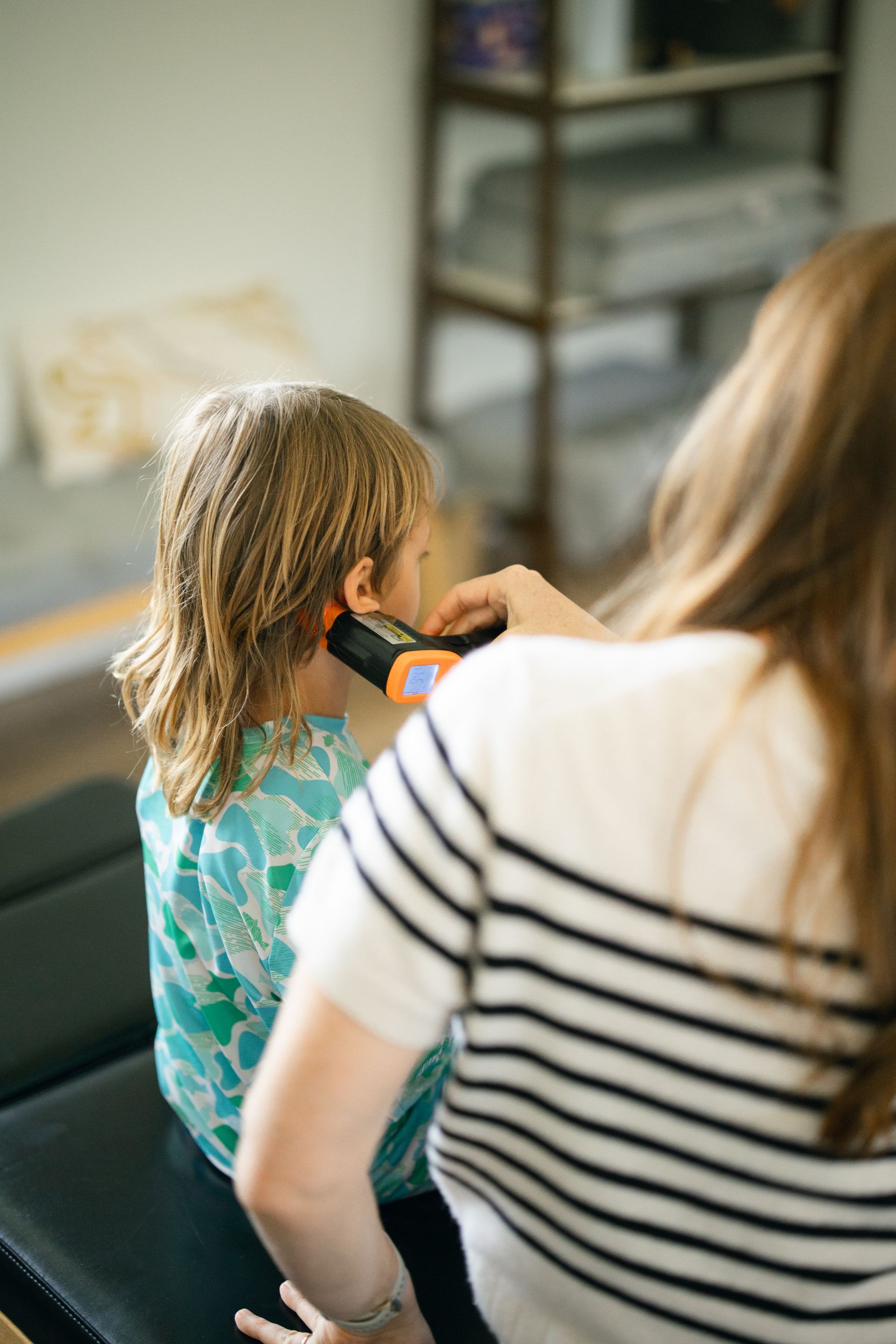
At Living Water Chiropractic in Boerne, we use INSiGHT scanning technology — including Heart Rate Variability (HRV), surface EMG, and thermal scans — to get an objective, measurable picture of how your child's nervous system is actually functioning. Not based on a checklist of behaviors. Based on real physiological data.
These scans identify exactly where the nervous system is stuck in sympathetic overdrive, where vagus nerve function is impaired, and where subluxation patterns are creating interference. It's the difference between guessing and knowing.
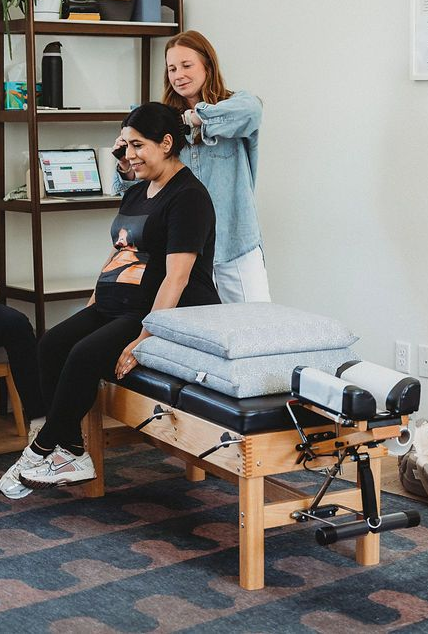
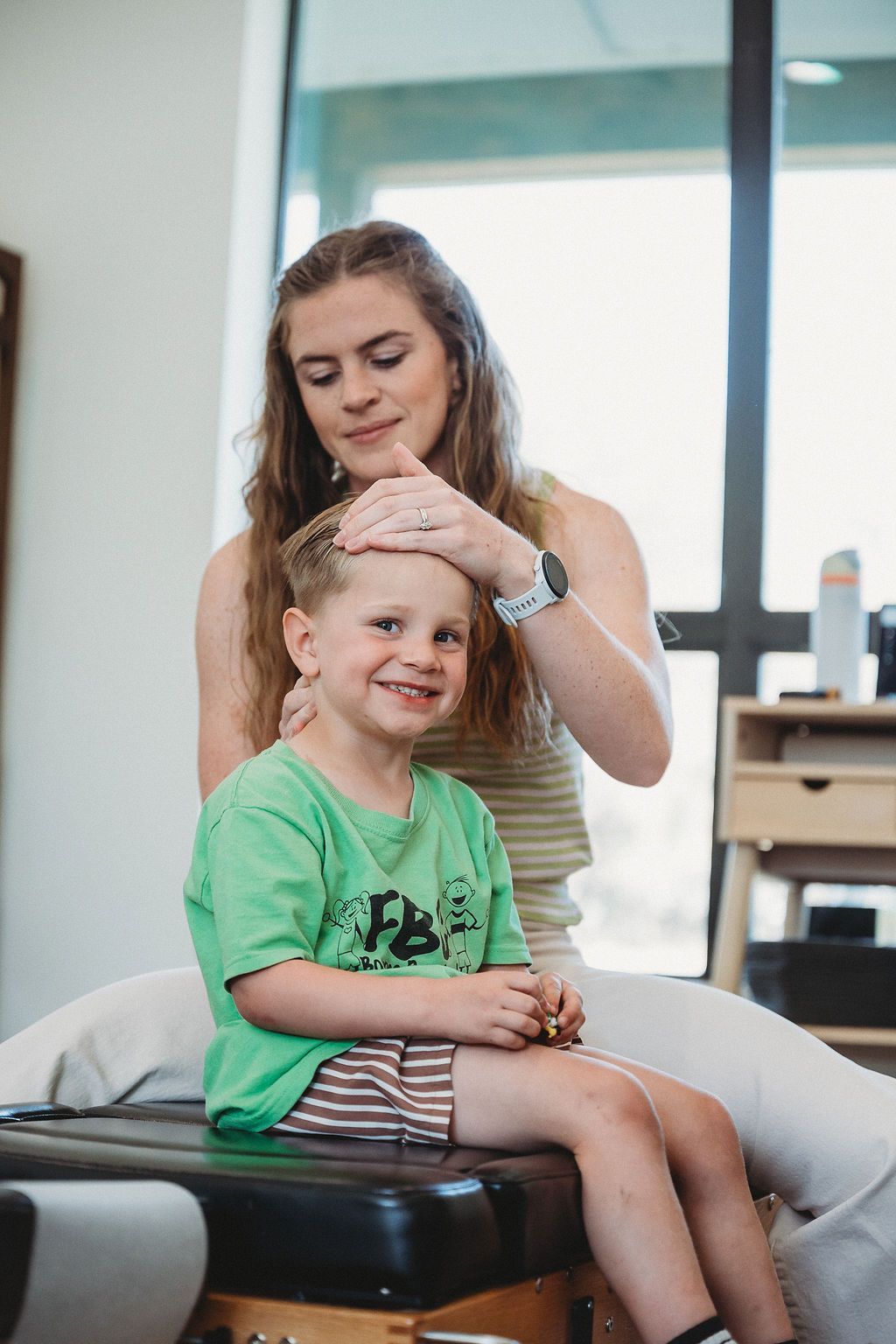
Neurologically-focused chiropractic care doesn't treat or cure specific conditions. What it does is work to restore the underlying regulation that shapes how your child processes their world. When the "brake pedal" starts functioning alongside the gas pedal, parents consistently see changes that go far beyond surviving a holiday — improvements in sleep, digestion, emotional transitions, and sensory tolerance that make everyday life genuinely easier.
The goal isn't to help your child cope with a dysregulated nervous system. It's to regulate the nervous system itself. When that foundation shifts, everything built on top of it shifts too.
Your Child Isn't Too Sensitive. Their Nervous System Is Telling You Something.
If this is connecting dots you've been trying to piece together for months — or years — you are not alone, and you are not missing something obvious. The link between what your child eats, how their environment affects them, and why some kids struggle when others don't is real, it's research-backed, and there is a path forward.
Your child's nervous system is telling you exactly what it needs. This Fourth of July, your family deserves more than survival mode.
Reach out to Living Water Chiropractic in Boerne today to learn more about nervous system regulation and whether an INSiGHT scan is the right next step for your child. If you're not local to us, visit the PX Docs directory to find a neurologically-focused chiropractor near you.
📍 Living Water Chiropractic | Boerne, TX | Serving families in Boerne, Fair Oaks Ranch, Helotes, and the greater San Antonio Hill Country area.