Why Your Child Still Isn’t Sleeping
Why Your Child Still Isn’t Sleeping... And What No One Has Told You Yet

You have tried everything you know to do. You have adjusted bedtimes, invested in blackout curtains, experimented with magnesium or melatonin, added white noise, and stayed consistent with routines. You have followed expert advice closely and done your best to create the “perfect” sleep environment. And yet, your child is still lying awake at night—exhausted, frustrated, and unable to fall asleep.
If this is where your family is right now, it is important to understand something clearly. You are not doing anything wrong, and your child is not the problem.
What you are seeing—that tired but wired state—is not a behavior issue. It is a nervous system that is stuck in stress mode. When the body is operating from that place, no routine, supplement, or external sleep strategy can fully override it. The system itself has to shift before real rest can happen.
A Quick Reality Check
Nearly one in three children in the United States are not getting enough sleep. That means millions of kids are starting each day already depleted, and over time, that lack of rest begins to impact every system in the body.
Sleep Isn’t Passive, It’s Foundational
Many parents understandably think of sleep as downtime. In reality, sleep is one of the most active and essential processes your child’s body goes through each day.
During sleep, the brain is organizing and storing everything your child learned, strengthening neural connections that support memory and development. Growth hormone is released, allowing the body to grow and repair. The immune system is actively building defenses, which is why children who are sleep-deprived often get sick more frequently. Emotional experiences are processed and regulated, which directly affects mood and behavior the next day.
Sleep is not a luxury or a bonus. It is the foundation that supports everything else—focus, behavior, digestion, immunity, and emotional regulation.
When sleep is disrupted, it is rarely an isolated issue. It is usually the beginning of a much larger pattern.
The Missing Piece: The Nervous System
Most conventional sleep advice focuses on habits and environment. While those things can be helpful, they often miss the core issue.
Sleep is not primarily a habit problem. It is a nervous system problem.
Your child’s nervous system is constantly balancing between two states. One is the sympathetic system, often described as the “gas pedal,” which controls alertness, stress, and the fight-or-flight response. The other is the parasympathetic system, or the “brake pedal,” which allows the body to rest, digest, and sleep.
For a child to fall asleep naturally, the nervous system must be able to shift from that activated, alert state into a calm, regulated one. When there is interference in that system—what we refer to as subluxation—that shift does not happen smoothly.
The result is a child who feels exhausted but remains internally “on.” The body is ready for sleep, but the nervous system is still signaling stress and alertness.
That is why they cannot fall asleep easily. That is why they wake frequently. That is why typical solutions often fall short.
Where It Starts: “The Perfect Storm”
For many children, sleep challenges are not new. They are the result of accumulated stress on the nervous system over time, something we refer to as The Perfect Storm.
This process often begins earlier than most parents realize
.
During pregnancy, elevated stress levels can influence a baby’s developing nervous system. Stress hormones like cortisol can cross the placenta and shape how that system responds after birth, often increasing sensitivity to stress.
During birth, certain interventions—such as inductions, C-sections, forceps, vacuum extraction, or prolonged labor—can place physical stress on a newborn’s upper neck. This area is especially important because it is where the vagus nerve exits the skull. The vagus nerve plays a critical role in regulating sleep, digestion, and overall calmness in the body.
In early childhood, additional stressors can continue to build. Frequent antibiotic use can disrupt gut health. Ongoing issues like reflux, constipation, or repeated illness can place continuous strain on the system. Each of these adds another layer of stress to a nervous system that may already be struggling to regulate.
Over time, this can lead to dysregulation of the autonomic nervous system, often referred to as dysautonomia. One of the earliest and most common signs of this imbalance is difficulty with sleep.
What Happens When Sleep Stays Disrupted
When sleep challenges persist, their impact extends far beyond bedtime.
Children who are not getting enough quality sleep may begin to show signs that resemble attention or behavioral disorders, including hyperactivity, impulsivity, and difficulty focusing. In many cases, this is not a primary behavioral issue but a reflection of a fatigued and overwhelmed nervous system.
The immune system also becomes less effective, which can create a cycle of frequent illness, increased medication use, and further disruption to the gut and nervous system. Learning can become more difficult as memory consolidation is impaired. Emotional regulation becomes more challenging, often leading to increased frustration, meltdowns, or mood swings.
Over time, chronic sleep deprivation can also affect mental health, as the nervous system lacks the capacity to process everyday emotional experiences effectively.
When multiple challenges are present—whether in behavior, focus, digestion, or immunity—sleep is often a central piece connecting them.
Addressing the Root Cause
If sleep challenges are rooted in nervous system dysregulation, then meaningful change requires addressing that system directly.
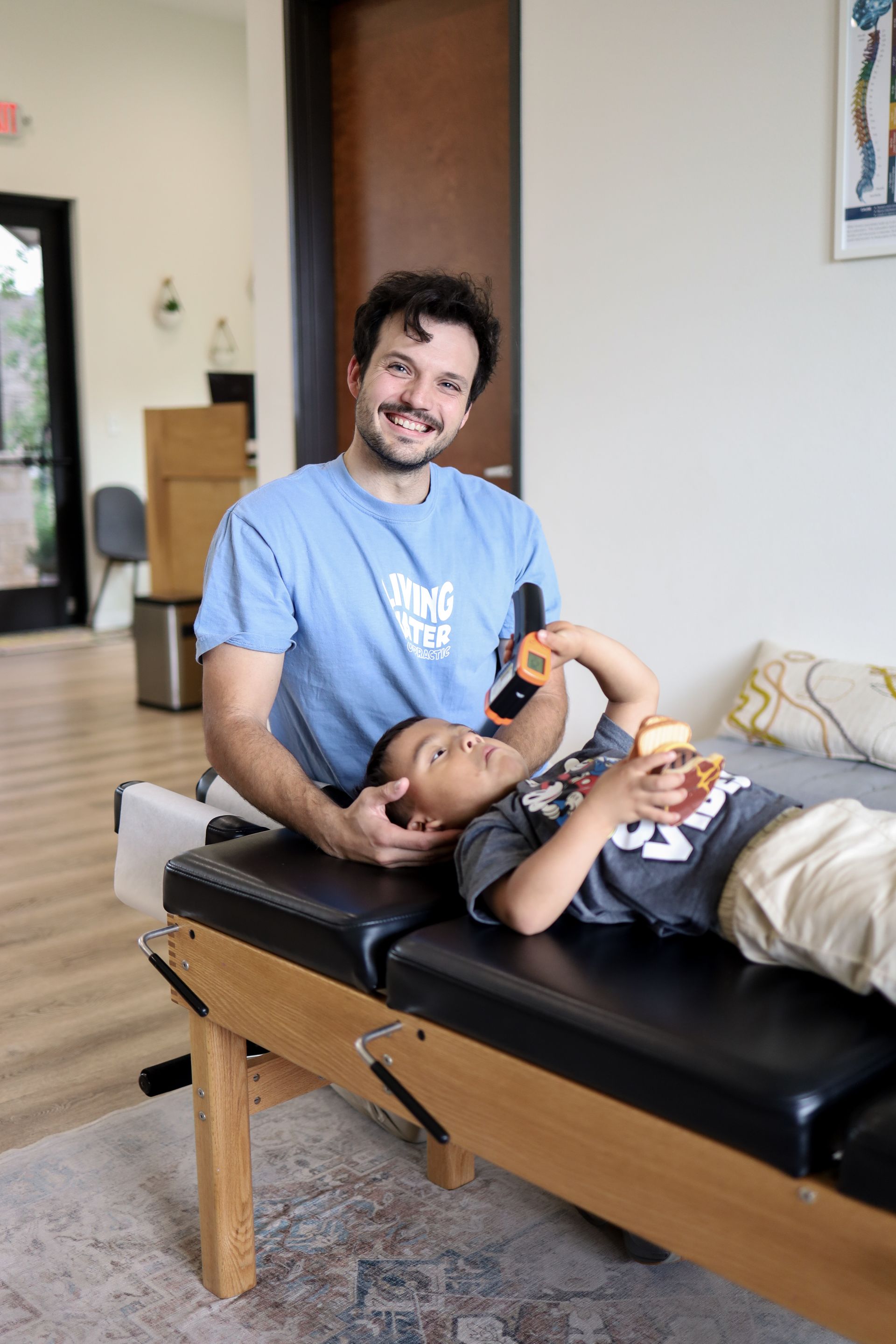
Neurologically-focused chiropractic care is designed to do exactly that. Rather than focusing only on symptoms, this approach works to identify and reduce interference within the nervous system.
Through gentle and specific adjustments, areas of subluxation are addressed so that communication between the brain and body can improve. As that communication is restored, the nervous system becomes more adaptable and better able to shift between states of stress and rest.
When this shift becomes possible, the body can begin to access deeper, more restorative sleep cycles.
The brake pedal starts working again.
Objective Insight Through Measurement
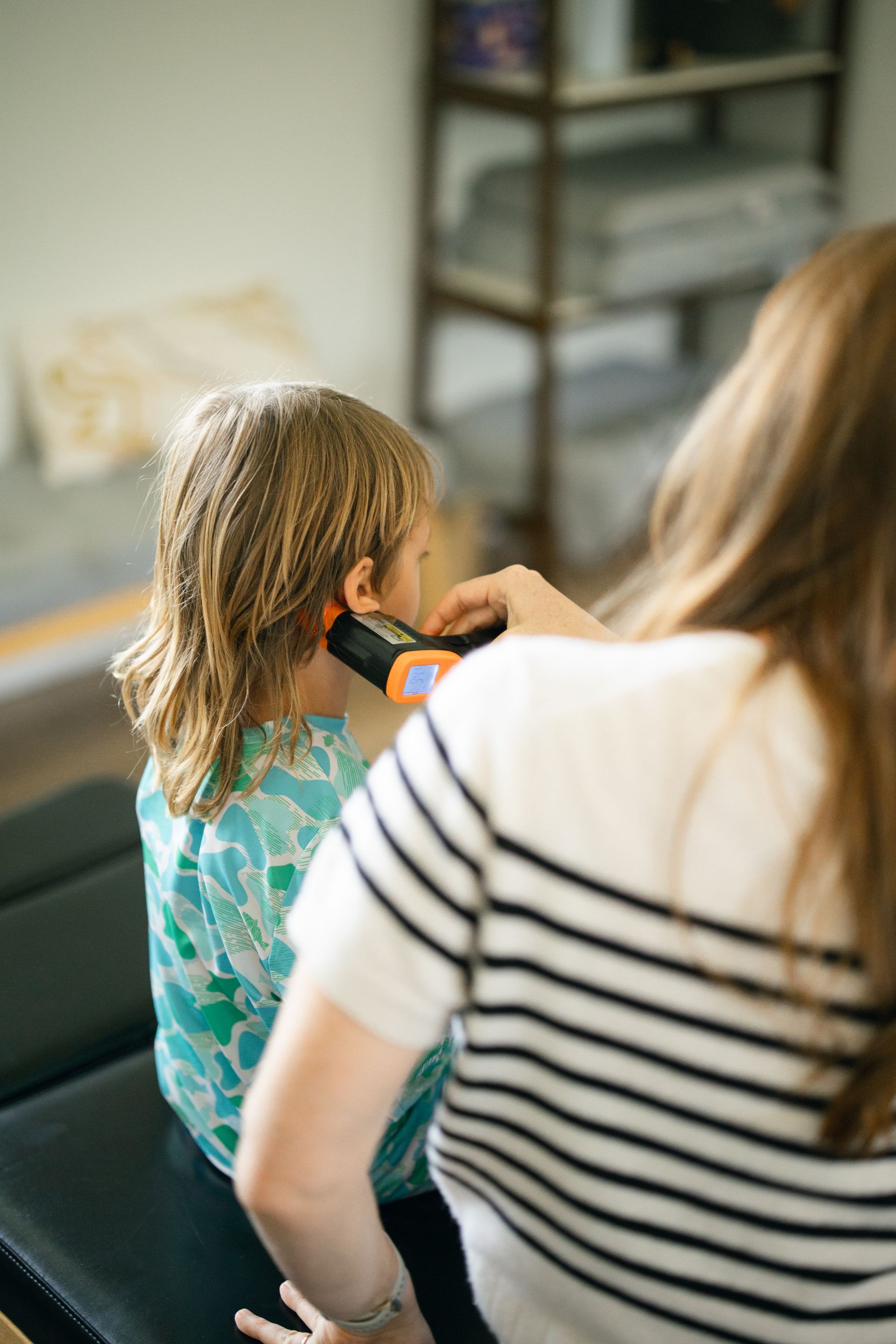
To understand exactly what is happening within your child’s nervous system, INSiGHT scanning technology is used to provide objective data.
These scans help identify where stress is being held in the body, how significant the dysregulation is, and which areas require the most support. This allows care to be tailored specifically to your child, rather than relying on generalized approaches.
Many families report that sleep is one of the first areas to improve. As sleep begins to regulate, other areas often follow, including digestion, immune function, behavior, and emotional resilience.
Sleep as the Foundation
When a child is able to achieve deep, consistent sleep, the effects are far-reaching. The brain processes information more effectively, the body grows and repairs more efficiently, and emotional responses become more balanced.
Everything begins to function from a stronger foundation.
A Different Way Forward
Sleep challenges are not simply a phase, and they are not something a child will always outgrow without support. They are often a signal that the nervous system is overwhelmed and in need of regulation.
There is a path forward that addresses the root of the issue rather than just the symptoms.
If you are ready to explore what is truly driving your child’s sleep challenges, Living Water Chiropractic in Boerne, TX can help guide you through the next steps. Scheduling an INSiGHT scan is often the first step in understanding what your child’s nervous system needs to function and rest the way it was designed to.
If you are not local, you can find a provider near you through the PX Docs directory!