Is It Defiance or Dysregulation?
Why Defiance
Isn't a Choice for Some Kids

You ask your child to put on their shoes. Thirty seconds later, you're standing in a full-blown standoff over a pair of sneakers.
You stayed calm. You stayed consistent. Then you stayed consistent again, and again, and again. And somewhere along the way, someone told you that if you were just a little more consistent, this would be working by now.
If you're reading this with a tired heart, please hear this first: you are not failing your child. You are a parent who loves a child who fights you on everything, who has already tried every strategy you've been handed, and who is tired of collecting labels without ever getting an explanation.
This post is for you. Because you deserve more than a name for what you're living with. You deserve to understand why.
What the ODD Label Gives You, and What It Doesn't
An Oppositional Defiant Disorder diagnosis gives you a name for the behavior you're already experiencing every day. That can bring some relief. It can also leave you with the same question you walked in with:
Why does a simple request land like a fire alarm in my child's body? Why can other kids bounce back after hearing "no," while mine spirals for an hour?
Here's the honest truth. A diagnosis describes what's happening on the surface. It says nothing about what's driving it underneath, and that's where the real answers live.
How ODD is defined
ODD is diagnosed when a child shows a lasting pattern of angry or irritable mood, arguing with adults, refusing requests, and spiteful behavior for at least six months. Clinicians look for four or more of these behaviors, showing up with people other than siblings, and causing real disruption at home or school.
Severity is graded by how many settings the behavior shows up in:
- Mild: one setting
- Moderate: two settings
- Severe: three or more settings
That detail matters more than most parents realize. A child who falls apart only at home is telling you something very different from a child who falls apart everywhere. Often, home is where kids finally let go of everything they've been holding together all day.
Every child is oppositional sometimes, and the criteria do a reasonable job of separating normal limit-testing from a persistent pattern. But criteria can only describe what a behavior looks like. They were never built to tell you where that behavior is coming from.
The Numbers Every Parent Deserves to See
According to the DSM-5-TR, ODD affects roughly 3.3% of children, with community studies ranging anywhere from 2.6% to 15.6% depending on how it's measured.
It also rarely shows up alone. In a study of 2,400 children ages 3 to 17, 53% of kids with the combined presentation of ADHD also met criteria for ODD. When Autism was also present, that number climbed to 62%.
And here's the finding most parents never hear. Research compiled by the American Academy of Child and Adolescent Psychiatry shows that roughly 67% of children no longer meet ODD criteria within three years. That sounds like good news, until you see the other side: about 30% go on to develop Conduct Disorder, and children first diagnosed in preschool carry roughly three times that risk. Many others show up years later with ADHD, anxiety, or mood struggles instead.
Put those numbers side by side, and a pattern appears. The behavior often changes shape rather than resolving. Kids don't simply grow out of it. A nervous system that never learned to find its brake pedal doesn't stop being dysregulated at age twelve. It just expresses it differently.
That's not meant to scare you. It's meant to show you why "wait and see" isn't your only option, and why looking underneath the label matters so much.
Your Child Has a Gas Pedal and a Brake Pedal
Every child's stress response is run by the Autonomic Nervous System, which has two branches:
- The sympathetic side is the gas pedal. Fight or flight. On alert. Ready for action.
- The parasympathetic side is the brake pedal. Rest, digest, calm down, and recover after something hard.
A regulated child moves smoothly between the two. They can ramp up when they need to, then settle back down afterward.
But when a child is stuck with the gas pedal pinned to the floor, ordinary requests like "put your shoes on" or "time to turn off the tablet" start registering like a threat.
Your child isn't choosing to escalate. Their system escalated first, and the behavior you're watching is what comes out the other side.
We call this pattern Sympathetic Dominance. When it becomes a child's default setting, it's a form of nervous system dysregulation, clinically known as dysautonomia.
Understanding this can change everything about how you see those hard moments. That meltdown isn't a power play. It's a nervous system asking for help.
Same Diagnosis, Different Nervous Systems
At the center of the brake pedal side sits the vagus nerve. It runs from the brainstem down through the neck, chest, and belly, and it helps regulate heart rate, digestion, inflammation, immune function, and the gut-brain connection. It's also central to emotional regulation.
People commonly measure how well the vagus nerve is doing its job through heart rate variability (HRV). Generally, higher resting HRV reflects a nervous system with more options, more flexibility, and a greater ability to recover.
We want to be honest with you about what the research shows. One study of boys ages 8 to 12 found that those with ODD had higher resting heart rates, but HRV didn't differ across the group overall. What did emerge were distinct nervous system profiles within that group. Kids whose aggression erupted in reaction to something showed high baseline arousal with low HRV under stress, while another group showed a pattern that looked almost opposite.
In other words, two children carrying the same three letters can have completely different nervous system patterns. That's exactly why we believe in measuring instead of guessing. Your child is not a diagnosis. Your child is an individual, and their care should be too.
The Perfect Storm Behind the Behavior
Nervous system dysregulation doesn't appear out of nowhere. It builds layer by layer, often before a child ever reaches school age. At PX Docs, we call this the Perfect Storm.
- Prenatal stress. A study following 7,994 mother-offspring pairs found that persistent maternal depressive signs across pregnancy and the first postpartum year were linked with a fourfold increased risk of ODD. (Mama, if you're reading this and feeling a pang of guilt, please set it down. Stress during pregnancy is incredibly common, and it is not your fault. Knowing this simply helps us understand your child's story.)
- Birth interventions. Prolonged labor, forceps, vacuum, or cesarean delivery can place mechanical stress on an infant's upper neck and brainstem, the exact region where vagus nerve function is most vulnerable.
- Early antibiotics and medications. Repeated early exposures can disrupt the developing gut microbiome. Through the gut-brain axis, that disruption can reach mood and impulse regulation.
- Ongoing stress and sensory load. Chronic stress, family changes, and sensory overload during key developmental windows can all push a child's system further toward the gas pedal.
Most parents we talk with can point to two or three of these right away. For many, that's the moment everything starts to make sense, and the moment the self-blame finally starts to lift.
Why Strategies Stall, and What Has to Come First
If you've tried sticker charts, timeouts, calm-down corners, parenting programs, and every behavioral strategy under the sun, and they just haven't stuck, there's a reason. And it isn't you.
One thing that can keep a child's system locked in gas-pedal mode is subluxation. Subluxation isn't simply a bone out of place. It involves three things:
- Misalignment of the neurospinal segments
- Restricted motion of those segments
- Neurological interference that disrupts brain-body communication
When motion is restricted, less sensory input travels up to the brain. And the brain needs that input to gauge where the body is and how safe the environment feels.
Behavioral strategies ask a child to reach for regulation skills. Medication can dampen the intensity of a response. But neither asks whether your child's system can physically access those skills in the moment.
If a child is stuck in survival mode, skills training has nowhere to land. It's like trying to push a car with the parking brake still on.
Here's the hopeful part. When the nervous system becomes more regulated, families and providers often report that those same strategies finally get traction. The tools didn't change. Your child's capacity to use them did. All that effort you've poured in wasn't wasted. It may just have been waiting for the right foundation.
How We Measure Instead of Guessing
This is where the guessing stops.
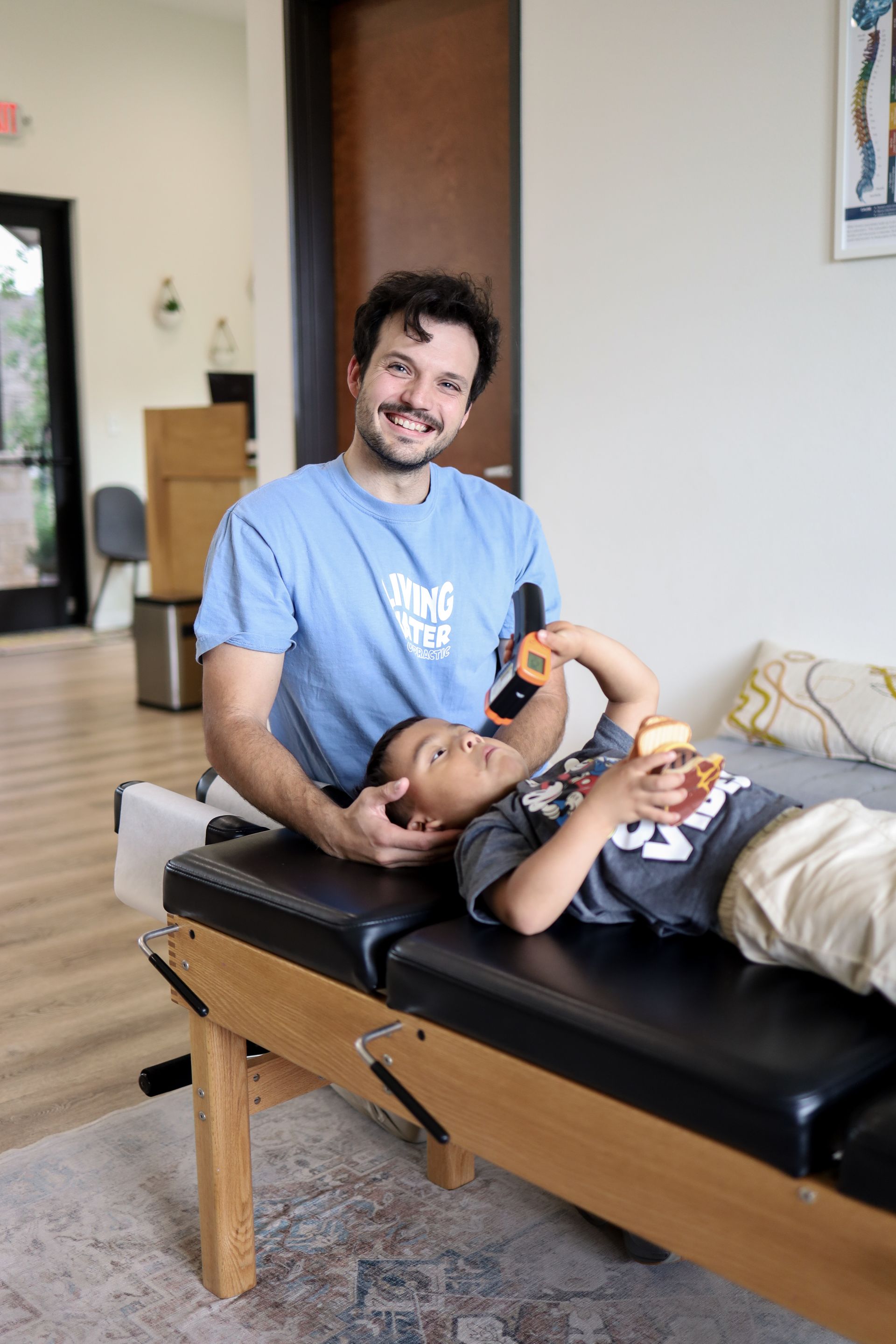
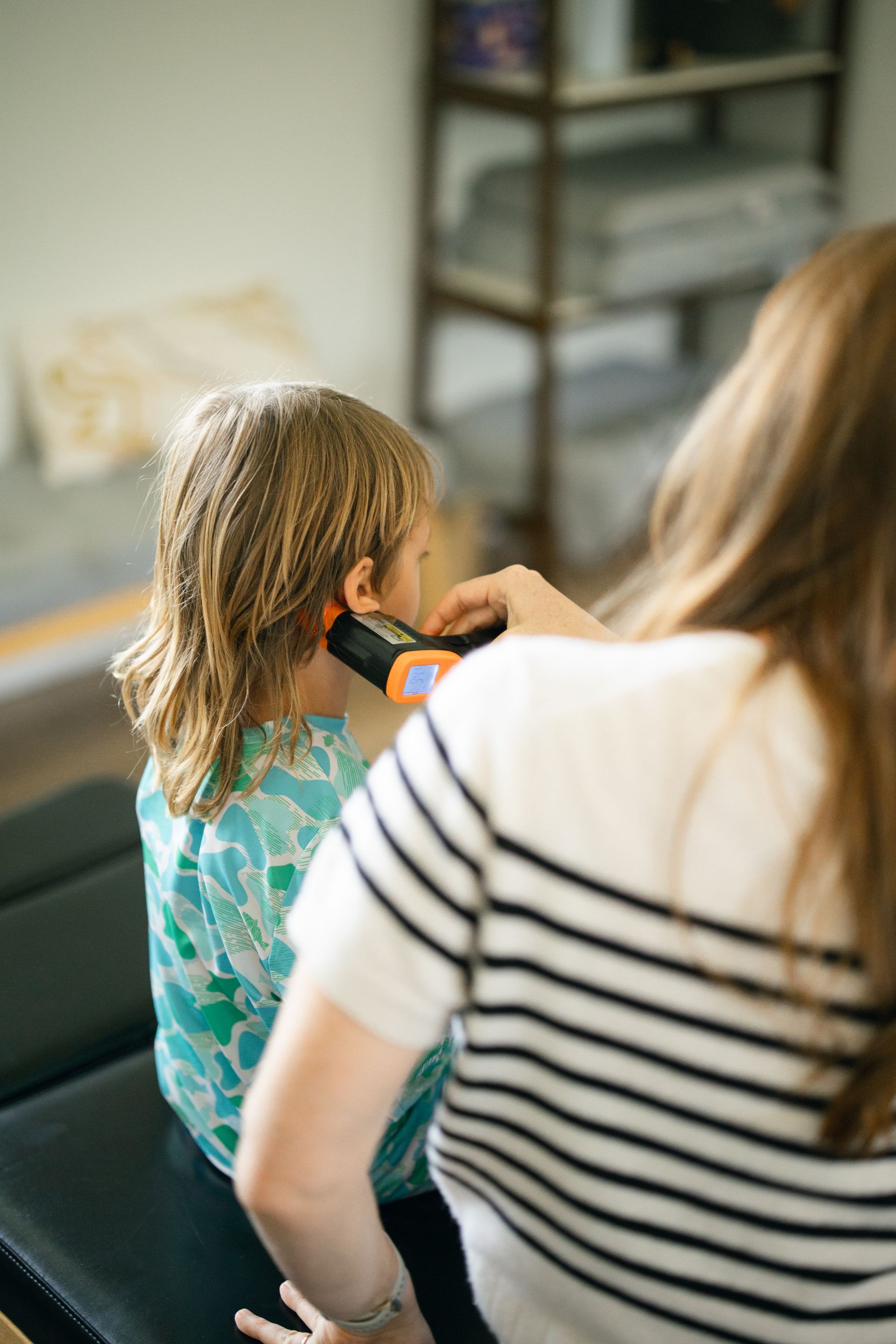
INSiGHT Scans are a set of three neurological assessment technologies developed and owned by CLA and used by Neurologically-Focused Chiropractors. They give us objective data instead of assumptions:
- neuroTHERMAL scanning assesses autonomic function
- neuroCORE surface electromyography (sEMG) measures tension patterns along the neurospinal system
- HRV testing reads autonomic balance directly
These scans don't diagnose medical conditions. They help locate nervous system dysfunction and dysregulation so we can build a customized care plan around what your child's system is actually doing, not what a label says it should be doing.
You Are Your Child's Best Advocate
If you've been managing this for years, being told to be more consistent, and quietly wondering what you're doing wrong, please hear this clearly:
You aren't doing it wrong. Your child is stuck in stress mode. And "stuck" is a physiological state. That means it's something that can be measured and worked with, not just endured.
You already know your child better than anyone. You've seen the sweet, funny, curious kid who shows up in the quiet moments between the storms. Trust that. Your child's real personality is in there. The goal is to clear the interference so it has room to come through.
Taking charge of your child's health doesn't mean having all the answers. It means asking better questions and finding a team that will help you find the why.
Take the Next Step
Your child doesn't need another label. They need answers.
If your child has been diagnosed with ODD or struggles with behavior and emotional regulation, please reach out to Living Water Chiropractic today to schedule a consultation and INSiGHT Scans. If you are not local to Boerne and the Texas Hill Country, check out the PX Docs directory to find an office near you.